

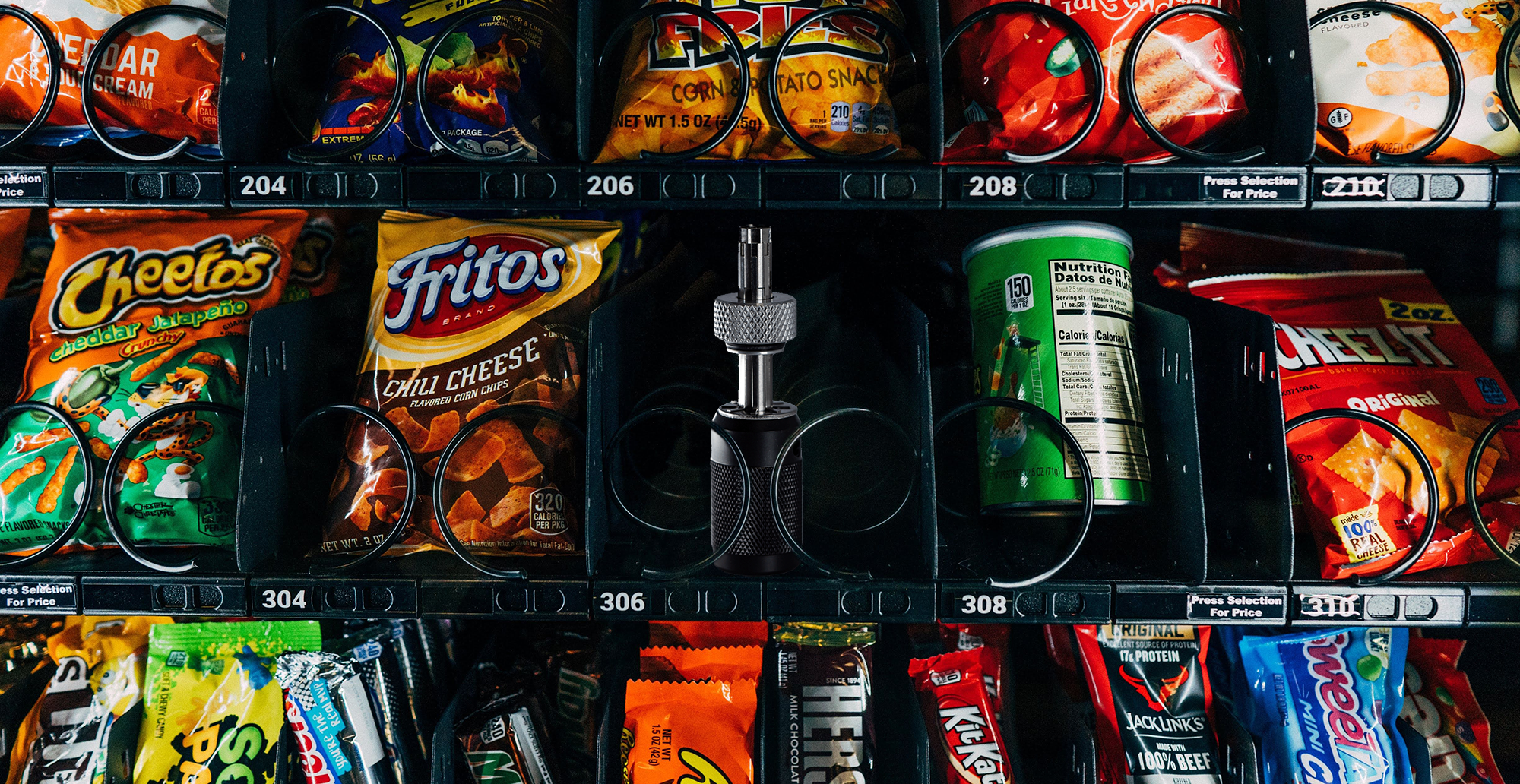
So here's a lock that fools just about everybody. You walk up to a vending machine, a coin-op washer, an old bike U-lock, one of those little gun cases, and instead of a normal keyhole you get this round hole with a ring of tiny slots and a little post in the middle. It looks high-tech. It looks tough. And most people take one look and figure there's no chance they're getting in without the key.
Now here's the thing: that round lock is usually way easier to open than the deadbolt on your front door. It's called a tubular lock, and once you get how it works, picking one goes from "no way" to "give me thirty seconds." So let me walk you through what these are, the story that blew their reputation wide open, and the two ways to pop one open.
So what even is a tubular lock?
Short version: a tubular lock is a regular pin tumbler lock, just built in a circle. Instead of a row of pins sitting above the keyway like your house lock, a tubular lock puts its pin stacks in a ring around a central post, and it opens with a round, cylindrical key that's got notches cut around the rim instead of a flat one with cuts along the edge. You'll also hear these called radial locks, axial pin-tumbler locks, or Ace locks, after the Chicago Lock Company brand that made them popular way back in 1933.

Now, if you already know how a normal lock works, you basically already know how a tubular one works, because it's the exact same deal. Every pin is really two pins, a key pin and a spring-loaded driver pin, and every one of them has to get lifted to the shear line so the plug can turn. The only real difference is the shape: the pins are in a circle instead of a line. Most tubular locks run six to eight pins, seven being the classic standard, and a few crazy ones go all the way up to ten.
The time a Bic pen humiliated an entire lock company
Before we get into tools, you should hear the story that told the whole world these locks aren't what people think they are. Because this is the one that blew it wide open.
Back in September 2004, a video started going around showing somebody opening a Kryptonite bike U-lock, one of the most trusted names in bike security, with the barrel of a Bic pen. Not some fancy tool. A ballpoint pen. You'd pop the shaft off a Bic, jam it into the tubular keyway, turn it under a little pressure, and the lock just gave up. In seconds.
Here's why it worked. Those Kryptonite locks used a tubular cylinder, and the shaft of a cheap Bic pen happened to be almost exactly the right diameter to fit that round keyway. Shove it in, turn it, and that was that. It was crude, it was ugly, and it worked on locks people were paying good money to trust with an expensive bike.
And man, the story went nuclear. The New York Times ran a piece literally titled "The Pen Is Mightier Than the Lock," WIRED covered it too, and it tore through every bike forum on the internet. The wild part? It took something as dumb as a pen beating a premium lock for the rest of the world to catch on to how soft these round locks really are.

Kryptonite ended up running a free exchange program to swap out everybody's affected locks, which was about as expensive and embarrassing as it sounds. And the whole bike-lock industry quietly took the hint. That's a big reason the better bike locks today ditched tubular cylinders and moved over to disc-detainer mechanisms, which are a genuinely harder nut to crack. So if you've ever wondered why your nice new U-lock takes a flat key instead of a round one, well, you can thank a Bic pen.
Now, don't go grabbing a pen and expecting miracles. Modern tubular locks with anti-pick pins shrug that pen trick right off, and honestly it only ever worked on the cheap legacy stuff. Anyways, as a lesson in "unusual doesn't mean secure," it's tough to beat, and it's the perfect setup for how you actually open one of these today.
How to pick a tubular lock
Okay, the part you came for. There are two real ways to open a tubular lock, and which one you go with just comes down to whether you want speed or skill. And hey, don't let that round keyhole intimidate you. We all started somewhere, nobody's picking one of these on day one, and with the right tool this is honestly one of the friendlier locks to learn on. I'll walk you through both, because we make the tools for each.

Method 1: The dedicated tubular pick (fast, and it makes you a key)
This first one feels like straight-up magic the first time you do it. A tubular pick is shaped like the key, round body and all, except where the key has fixed notches, the pick carries a ring of independent feelers, one for every pin, held under adjustable tension by a collar you snug up or back off by hand. Our Covert Tubular Lock Pick handles both seven and eight pin locks, with or without tensioning notches.
Here's how you run it:
- Reset the feelers. Loosen that collar until it's just barely finger tight, so the feelers can still slide but they're holding a little tension. Push them all out even, then press the tip flat against a hard surface to bring them back to the same baseline.
- Insert it straight. Slide the pick into the lock nice and straight, letting the feelers find and press down each pin stack. Keep it straight the whole time, because tipping the pick sideways is the quickest way to crack that fragile tip.
- Rotate it under tension. Put a little turning pressure on the body, same as you would with a turning tool, and gently rotate the pick back and forth, left to right. One at a time, each feeler finds its pin's shear point and just sits there.
- Feel it open. After a few seconds of working it, all the pins hit the shear line together and the plug turns. Here's the tell to listen for in your fingers: right before it goes, the pick stops fighting you and suddenly turns easy, like the whole thing went light. That's the moment. With a little practice, a seven pin lock pops in anywhere from five to sixty seconds.
- Reset if it stalls. If it doesn't pop, no big deal, pull the pick out, reset the feelers even again, bump the tension up just a hair, and go again. Nine times out of ten, a lock that's fighting you just wants a touch more tension.
Now here's the really cool part, and it's the one that gets everybody the first time. Once it's open, you tighten the collar down and those feelers lock in place at the exact heights that opened the lock. You're now holding a working key that'll open that lock over and over. Read the depths off the tool with a decoder and you can even get a real key cut from the code. Hang onto that idea, because it's the whole reason I say a tubular lock is weaker than your front door, and we'll come back to it in a minute.
If you'd rather just watch than read, here you go, the whole thing in action:
Method 2: Single pin picking a tubular lock (the skill route)
So the dedicated pick is fast, but a lot of pickers love doing it the hard way, because it's a genuine test of skill. You can single pin pick a tubular lock, setting one pin at a time around the ring, the same way you'd SPP (single pin picking) a normal lock. The catch is that a standard hook can't reach into that circular keyway, so you need tools built for the geometry.
That's exactly what our Tubular Pick 0.025" and Turner set is for. You get a 0.025 inch single-pin tubular pick paired up with a matching tubular turning tool, so you apply tension with the turner and pick each pin one at a time around the circle. It's slower and it takes way more feel than the decoder pick, but honestly, there's nothing quite like setting a tubular lock pin by pin. That same pick and turner also come in our Echelon Pick Set, our intermediate lineup, if you'd rather grab tubular capability as part of a full kit.
Want to see it done clean? The LockPickingLawyer put together a great demo of exactly this kind of pick and turner at work:
So which one should you learn? Honestly? Both. The dedicated pick is your practical, get-in-now tool. Single pin picking is where the real craft lives. Do yourself a favor and pick up both.
So how secure are these, really?
Honestly, the right question isn't whether a tubular lock is secure, it's secure against who. Frame it that way and these locks make a whole lot more sense.
Against your average person? They're plenty. Nobody strolling past a vending machine is carrying a tubular pick, and a solid seven or eight pin lock with anti-pick pins will send a curious amateur packing in a hurry. If all you're trying to do is keep the honest and the opportunistic out, a tubular handles that every single day without breaking a sweat.
And you'll find them doing exactly that job all over the place. Once that round keyway jumps out at you, you start spotting tubular locks everywhere:
- Vending machines and coin-op laundry
- Bike U-locks and chain locks, especially older ones
- Small gun cases and commercial safes
- Elevator and alarm panels
- Kensington-style computer and laptop locks
- Display cases, jewelry cabinets, and utility cam locks


Notice the theme there? A whole lot of those are guarding a box of quarters, and that's actually where the "high security" reputation comes from. Not the lock being tough, just the lock sitting on top of the money. The real reason companies reach for tubular locks is that they can be built physically shorter than a normal pin tumbler, which is super handy when space is tight, like a vending coin box or the compact head of a Kensington-style laptop cable lock. That tough-guy image is doing a ton of heavy lifting it never earned.
Because here's the thing that should actually give you pause, and you watched it happen yourself back in Method 1. With most locks, even if somebody picks their way in, they've beaten it this one time and they're starting from scratch tomorrow. Beat a tubular the easy way and you don't just get in, you tighten a collar and walk out holding a working copy of the key, with the depths sitting right there to get a real one cut. Picking a normal lock is a break-in. This is closer to copying the key and keeping it.
And think back to that Bic pen for a second, because it's the same lesson scaled up. These locks are all built to one predictable pattern, so the trick that beats yours beats the identical one across town. There's none of the per-lock uniqueness that makes your house key actually yours. That's not bad workmanship, it's just the honest trade-off of the design.
So use one for what it is: a perfectly good deterrent on low-stakes stuff, a cabinet, a coin box, a gym locker. Just think twice before you trust one with anything you'd genuinely hate to lose, because the day somebody who knows the trick shows up, it isn't going to slow them down much. Know your tool, that's the whole game.
Common mistakes to avoid
Muscling it. Same rule as every other lock: this is finesse, not force. Cranking down hard on a tubular pick just jams the pins and can wreck the tool. Light tension, gentle motion, that's the whole game.
Tipping the pick. Keep that pick straight in the lock. Leaning or angling it while you work is the number one way to snap that fragile tip.
Forgetting to reset. Every fresh attempt starts with the feelers reset even and lined back up with the end of the pick. Skip that and you're basically starting with the wrong key.
Where to practice
Now, tubular picking is one of those skills that clicks fast once you've got a lock to drill on, but do yourself a favor and don't learn on the vending machine at work. Grab a dedicated Tubular Practice Lock and run your reps on your own bench. And if you want the pick and the practice lock together, the Tubular Lock Picking Bundle pairs our Covert Tubular Pick with the practice lock, so you've got everything to start in one box.
And here's the thing about practicing these: every lock's a little different, and even the same lock can open easy one minute and fight you the next. That's totally normal, so don't let it get in your head. A good habit early on is to open the same lock a bunch of times in a row until the feel of that "it went light" moment gets burned into your hands. Keep your touch light, stay patient, and let the feedback do the teaching.
So, give it a try yourself
Tubular locks are proof that a lock looking unusual doesn't make it strong, and they're honestly one of the most fun, fast, satisfying things you can learn in this hobby. Now you know both ways to open one, the quick decoder route and the pin-by-pin skill route.
If you want to give it a shot, grab whatever fits how you like to work, the Covert Tubular Lock Pick for speed or the Tubular Pick and Turner for skill, throw a practice lock on the bench, and just have fun with it.
Anyways, that's what I've got on tubular locks. Go get comfortable with the round keyhole everybody else is scared of, pick responsibly, and I'll catch you next time.
Frequently Asked Questions
Can you really pick a tubular lock with a pen?
On some old locks, yes, but don't count on it. The famous Bic pen trick worked on cheap legacy tubular locks like older Kryptonite bike U-locks, where a pen shaft happened to fit the keyway. Modern tubular locks with anti-pick pins defeat the pen trick, so for anything current you'll want a real tubular pick.
How many pins does a tubular lock have?
Most have six to eight, with seven being the most common standard. Some go as high as ten, and higher pin counts, especially with anti-pick pins, are noticeably harder to pick.
Are tubular locks hard to pick?
With the right tool, they're actually one of the easier locks to open, often faster than a standard pin tumbler. Without a tubular-specific pick, though, they're a real pain, since normal hooks and rakes can't reach the circular ring of pins.
What size tubular pick do I need?
Match the pin count. A 7-pin pick covers the most common locks, and an 8-pin pick handles those plus many 7-pin locks. Our Covert Tubular Lock Pick is built for both 7-pin and 8-pin locks.
Share:
Tension Wrench or Turning Tool? Which Is It?
Bump Keys: How a $5 Key Opens Half the Front Doors in America